
How to Choose the Best Biotech Laboratory Consumables for Your Needs?

In the rapidly evolving field of biotechnology, selecting the right biotech laboratory consumables is paramount for success. According to a recent market report, the global biotech consumables market is projected to grow by over 10% annually through 2025. This growth underscores the increasing reliance on high-quality materials that can enhance research outcomes. As laboratories expand their capabilities, the need for precision products becomes even more critical.

Choosing the best consumables involves understanding specific needs, such as sample type and testing protocols. High-quality tubes, pipettes, and reagents can significantly impact experimental results. For instance, a study revealed that selecting appropriate pipette tips can improve accuracy and reduce contamination in sensitive assays. However, many laboratories often overlook these details, leading to suboptimal outcomes.

With so many options available, it is easy to feel overwhelmed. Each supplier offers unique products, complicating the decision-making process. Therefore, a thorough evaluation of supplier reputation, product specifications, and user reviews is essential. Balancing cost and quality can also be challenging. Institutions must reflect on their priorities to ensure they select the most effective biotech laboratory consumables.

How to Choose the Best Biotech Laboratory Consumables for Your Needs?

Understanding Your Specific Biotech Lab Requirements

Choosing the right biotech laboratory consumables relies heavily on understanding your lab's unique needs. Consider the specific experiments you will conduct. Do they require precision in measurements? Pay attention to consumables that enhance accuracy. If your focus is on cell culture, selecting the correct media and reagents is crucial. Evaluate the quality and compatibility of the products you choose.

Laboratory workflows differ greatly. A busy lab might prioritize speed and efficiency over specialized products. Customizing your purchasing decisions means assessing the volume of samples processed daily. Reflect on your past experiences—what worked and what didn’t. Discussing with colleagues can provide insights into potential gaps in your current supplies. Look for reliable sources that can guide your choices, filling these gaps effectively. Balancing cost with quality can be a challenging aspect, requiring thoughtful consideration of your lab's long-term goals.

Biotech Laboratory Consumables Usage Comparison

Evaluating Quality and Reliability of Laboratory Consumables

When selecting laboratory consumables, quality and reliability stand out as crucial factors. Evaluating these attributes goes beyond a simple inspection. For instance, a study published in the Journal of Laboratory Automation highlights that nearly 30% of lab errors stem from using subpar consumables. This statistic underscores the importance of rigorous assessments.

One effective method to evaluate reliability is through supplier certifications. Certifications from recognized standards, such as ISO 13485, provide assurance about the quality control processes in place. Furthermore, peer-reviewed research has demonstrated that labs using certified consumables report 25% fewer quality-related incidents. This correlation between certification and reliable performance is significant and should not be overlooked.

Moreover, the materials used in laboratory consumables can impact experimental outcomes. A report from the American Chemical Society suggests that varying material compositions lead to different reactivity levels in chemical processes. Researchers need to consider how these differences might affect their results. While it’s tempting to prioritize cost over quality, such decisions may compromise the integrity of research findings.

How to Choose the Best Biotech Laboratory Consumables for Your Needs?

Item Type Quality Score (1-10) Reliability Rating (1-5) Price Range ($) Recommended Usage
Pipette Tips 9 5 15-30 Molecular Biology, Cell Culture
Microcentrifuge Tubes 8 4 10-25 DNA Extraction, PCR
Culture Plates 9 5 20-40 Bacterial and Fungal Culturing
Reagents 7 4 50-100 Chemistry and Biochemistry
Lab Coats 8 5 15-35 Safety and Protection

Comparing Cost vs. Performance of Different Products

When selecting biotech laboratory consumables, evaluating cost versus performance is crucial. Different products will have varying price points, which can significantly affect your overall budget. A study by the International Laboratory Equipment Association found that up to 30% of lab operational costs stem from consumables. Therefore, understanding how to balance these costs with the performance of the products is essential.

Performance can often be quantified by factors such as accuracy, durability, and user feedback. For instance, a report from the Analytical Chemistry Society revealed that labs prioritizing high-performance consumables showed a 25% increase in efficiency. However, products with lower price tags may not always be inferior. Some budget-friendly options perform adequately for specific applications, leading to cost savings without significant drawbacks.

It’s important to critically assess if the more expensive options truly deliver added value. Lab managers may overestimate the correlation between price and quality. Conducting pilot tests on selected products can offer insight into real-world performance. This hands-on approach provides valuable feedback, helping to identify any unexpected challenges or inefficiencies with the chosen products. Ultimately, informed decisions based on performance metrics can lead to more effective lab operations.

Researching Supplier Reputation and Customer Feedback

When selecting biotech laboratory consumables, understanding supplier reputation is critical. Start by exploring reviews and testimonials. Look for feedback on specific products. This can reveal whether the items meet your expectations. A supplier with a solid track record tends to be more reliable.

Consider the depth of customer feedback. Reviews can highlight durability and usability. If many users report issues like poorly designed products, this could raise red flags. Take time to analyze this information. A few negative remarks among an ocean of positives may indicate isolated incidents. Still, consistent complaints should not be overlooked.

Tips: Always check third-party review sites for unbiased opinions. Engage in forums or groups where professionals share experiences. Ask colleagues about their preferences and past experiences. Gather as much information as possible before making a decision. Making an informed choice ultimately saves you time and resources in the long run.

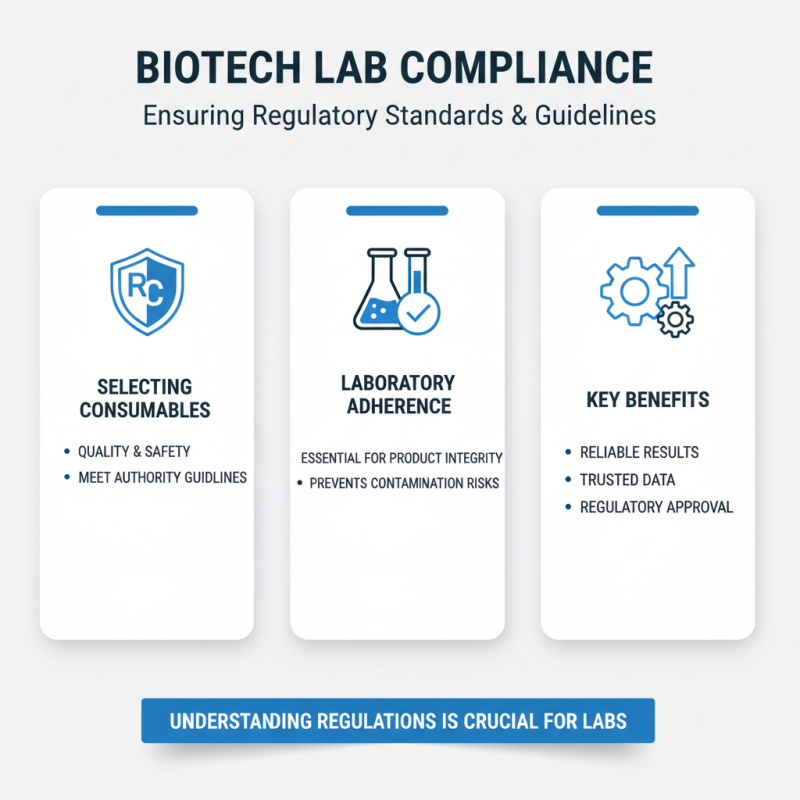
Ensuring Compliance with Regulatory Standards and Guidelines

How to Choose the Best Biotech Laboratory Consumables for Your Needs?

When selecting biotech laboratory consumables, compliance with regulatory standards is essential. Laboratories must adhere to guidelines set by authorities. These guidelines ensure that products meet quality and safety requirements. Understanding these regulations is key for lab managers and staff alike.

Regulatory bodies often outline specifications for materials and testing procedures. For instance, consumables used in clinical trials must undergo rigorous validation. Failure to comply can lead to significant setbacks. Keeping up with evolving standards requires ongoing education and training. This might prove challenging, as regulations change frequently.

Choosing the right consumables involves more than just cost. It’s about reliability and quality assurance. Some suppliers may offer general products, which can be tempting. However, these may not always meet specific regulatory criteria. Investing time in research can lead to better outcomes. Reflecting on past choices may help, ensuring future decisions align with best practices.

Cell Projects Ltd
Privacy Overview

This website uses cookies so that we can provide you with the best user experience possible. Cookie information is stored in your browser and performs functions such as recognising you when you return to our website and helping our team to understand which sections of the website you find most interesting and useful.