
How to Choose Genetic Analysis Solutions for Your Lab?
Choosing genetic analysis solutions is no longer a simple equipment purchase. It affects sample quality, turnaround time, data security, and clinical confidence. The National Human Genome Research Institute reports that whole-genome sequencing costs fell from approximately $100 million in 2001 to near $1,000 in recent years. Lower costs create opportunity. They also create pressure to process more samples accurately.
Your laboratory may need targeted panels, whole-exome sequencing, whole-genome sequencing, or copy-number analysis. Each option serves different research and diagnostic questions. The right choice depends on specimen types, expected throughput, read depth, bioinformatics capacity, and validation requirements. A small oncology laboratory may value rapid reporting and a focused panel. A population-genomics center may need scalable automation and long-term data storage.
The market is expanding quickly. Grand View Research estimated the global next-generation sequencing market at about USD 8.9 billion in 2023. That figure signals strong investment, but market growth does not guarantee laboratory fit. Vendor demonstrations can look impressive. Daily workflows are less forgiving. Consider a frozen sample arriving at 8:00 a.m., a failed extraction at noon, and a reporting deadline before the next clinic session. Can the platform recover?
Reliable evaluation should combine published performance data, hands-on testing, staff expertise, and documented quality controls. Review analytical sensitivity, specificity, reproducibility, contamination monitoring, and software traceability. Ask for independent evidence, not only vendor claims. Standards from bodies such as CLSI and guidance from the FDA can support a defensible assessment. No solution is perfect. Your first shortlist may still be wrong. A carefully designed pilot can reveal hidden costs, training gaps, and workflow friction before a major investment.
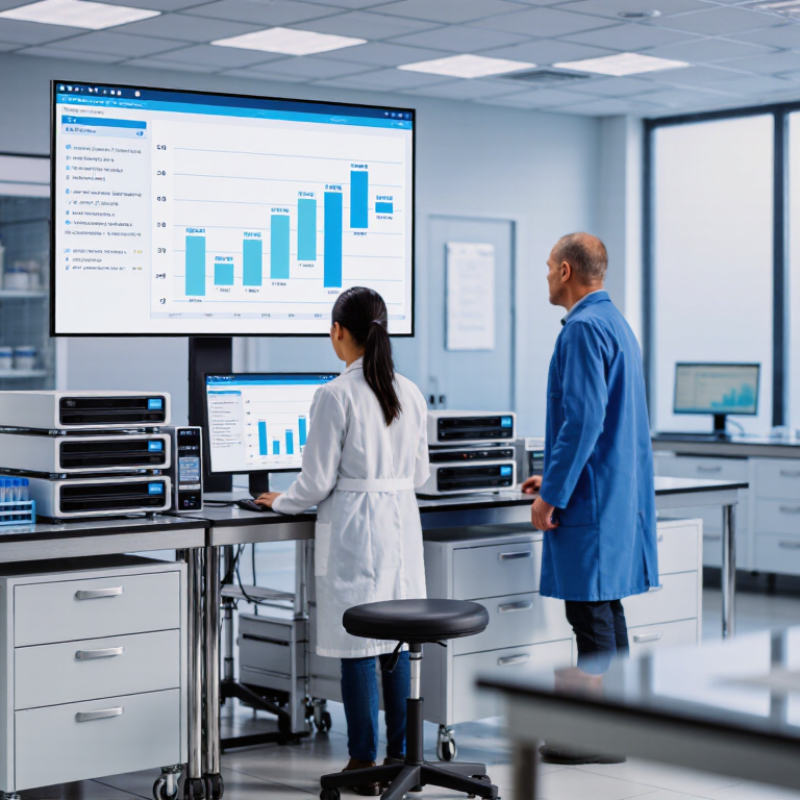
Define Your Lab’s Genetic Analysis Goals and Sample Requirements
Before choosing a genetic analysis solution, define the question your lab must answer. Are you screening known variants, comparing expression patterns, or measuring genetic differences across samples? Each goal requires different workflows, controls, and reporting depth. A clinical team may need traceable results and strict quality records. A research group may value flexibility and exploratory analysis. Write the intended decision in one sentence. Keep it visible during evaluation. This simple step prevents impressive technology from solving the wrong problem. It sounds obvious. It is often missed.
Sample details should guide the technical shortlist. Record organism, tissue source, expected concentration, extraction method, and storage history. Fresh, frozen, and preserved material can produce different quality profiles. Note inhibitors, limited volume, and repeated freeze-thaw cycles. These details affect preparation, sensitivity, and reproducibility. Ask how many samples arrive each week, not only how many fit one project. Throughput changes staffing, turnaround time, and error risk. Include negative controls, reference materials, and replicate samples in the plan. They can reveal contamination, drift, and inconsistent handling. In my experience, teams sometimes estimate sample quality too generously. Build a small pilot with representative specimens before committing. Review failed runs openly, because a neat spreadsheet can hide practical problems. Require documented performance data, clear acceptance criteria, and secure handling of genetic information. A solution should fit your samples, not force your samples into an ideal workflow.
| Genetic Analysis Goal | Recommended Analysis Approach | Typical Sample Types | Input and Quality Considerations | Key Data Output | Important Selection Criteria |
|---|---|---|---|---|---|
| Targeted variant detection | Targeted amplification or hybrid-capture sequencing focused on predefined genes or genomic regions. | Whole blood Saliva Tissue Cell-free DNA | Requires well-defined target regions and sufficient DNA quantity. Formalin-fixed, paraffin-embedded tissue may contain fragmented DNA and chemical damage. | Single-nucleotide variants, small insertions and deletions, and selected copy-number changes within the target panel. | Target coverage, limit of detection, uniformity, depth of sequencing, and compatibility with low-input or degraded DNA. |
| Inherited disease testing | Single-gene testing, multigene panel testing, exome sequencing, or genome sequencing, depending on the suspected condition. | Blood Saliva Buccal cells Prenatal samples | High-quality germline DNA is generally preferred. Family-member samples can support segregation analysis and interpretation of uncertain variants. | Germline variants, zygosity, inheritance patterns, and clinically relevant variant classifications. | Variant-discovery breadth, coverage of clinically important regions, structural-variant detection, annotation quality, and interpretation workflow. |
| Cancer mutation profiling | Somatic targeted sequencing of tumor tissue, often paired with a matched normal sample when distinguishing inherited from tumor-specific variants is important. | Tumor tissue FFPE tissue Plasma Matched blood | Tumor cellularity, DNA damage, sample age, and variant allele fraction can strongly affect performance. Low-frequency variant detection requires validated analytical sensitivity. | Somatic substitutions, insertions and deletions, copy-number alterations, gene fusions, and selected biomarkers. | Limit of detection, tumor purity handling, unique molecular identifiers, fusion detection, and quality-control metrics for degraded material. |
| Liquid biopsy and minimal residual disease monitoring | Cell-free DNA analysis using highly sensitive targeted sequencing or digital variant-detection methods. | Plasma Cell-free DNA | Plasma processing time, leukocyte DNA contamination, low DNA concentration, and very low variant fractions are critical factors. Specialized blood-collection tubes may help stabilize samples during transport. | Low-frequency somatic variants, tumor-derived DNA signals, and longitudinal molecular response measurements. | Analytical sensitivity, background error suppression, molecular barcoding, plasma input requirements, and reproducibility across time points. |
| RNA expression and transcript analysis | RNA sequencing, targeted RNA panels, or reverse-transcription quantitative PCR for selected transcripts. | Fresh tissue Frozen tissue Stabilized tissue Cell culture | RNA is more susceptible to degradation than DNA. Rapid stabilization, low ribonuclease exposure, and assessment of RNA integrity are important for reliable results. | Gene-expression levels, transcript abundance, splice variants, and pathway-related expression patterns. | RNA integrity tolerance, strand specificity, transcript coverage, batch-effect control, and normalization strategy. |
| Fusion and transcript-variant detection | RNA-based sequencing or a fusion-focused assay designed to detect known and novel transcript rearrangements. | Tumor tissue FFPE tissue Fresh tissue | RNA degradation and incomplete transcript representation can reduce sensitivity. Assays should specify whether they detect known partners only or support discovery of novel fusion partners. | Gene fusions, exon-skipping events, rearranged transcripts, and supporting read evidence. | Partner discovery capability, intronic or exonic design, minimum RNA quality, read support requirements, and orthogonal confirmation options. |
| Copy-number and structural-variant analysis | Genome-wide sequencing, microarray-based profiling, targeted copy-number analysis, or a combined sequencing workflow. | Blood Tumor tissue Prenatal samples Cell lines | High molecular-weight DNA and even genomic representation improve performance. Mosaicism, repetitive regions, and complex rearrangements may require complementary methods. | Deletions, duplications, amplifications, loss of heterozygosity, and selected genomic rearrangements. | Genome-wide resolution, sensitivity to mosaic events, breakpoint detection, repeat-region performance, and confirmation requirements. |
| Microbial genome and metagenomic analysis | Whole-genome sequencing for isolated organisms or metagenomic sequencing for mixed microbial communities. | Culture isolates Swabs Stool Environmental samples | Host-DNA background, microbial abundance, contamination control, and extraction bias can affect detection. Negative controls are important for low-biomass samples. | Species identification, strain relationships, antimicrobial-resistance genes, taxonomic profiles, and functional pathways. | Contamination monitoring, host-read depletion, taxonomic reference databases, assembly performance, and analysis-pipeline transparency. |
| High-throughput population or cohort studies | Standardized genotyping, targeted sequencing, exome sequencing, or genome sequencing across large sample sets. | Blood Saliva Biobank samples | Consistent collection, storage, extraction, and library preparation are essential. Batch effects and sample tracking become increasingly important as study size grows. | Genotypes, rare variants, common variants, ancestry markers, and phenotype-associated genomic signals. | Automation readiness, sample tracking, batch balancing, call-rate consistency, data-standard compatibility, and scalable storage. |
| Confirmatory variant analysis | Orthogonal confirmation using an independent method, such as Sanger sequencing, quantitative PCR, digital PCR, or a separate targeted assay. | Purified DNA Blood Tissue Plasma | The confirmation method should be selected according to variant type, expected allele fraction, amplicon complexity, and the quality of the original sample. | Independent confirmation or quantification of a previously detected variant or copy-number event. | Orthogonality, analytical sensitivity, turnaround time, validation documentation, and suitability for the specific variant class. |
Related Posts
-

Top 10 Forensic DNA Analysis Techniques in China Today?
-

China Best Forensic DNA Analysis Services for Global Buyers?
-
Top 10 DNA Extraction Technologies Revolutionizing Genetic Research
-

Top 5 DNA Analysis Workflows You Should Know About?
-

Top 10 Biotech Laboratory Consumables You Need for Successful Experiments?
-

2026 Top Sample Collection Devices for Efficient Data Gathering?