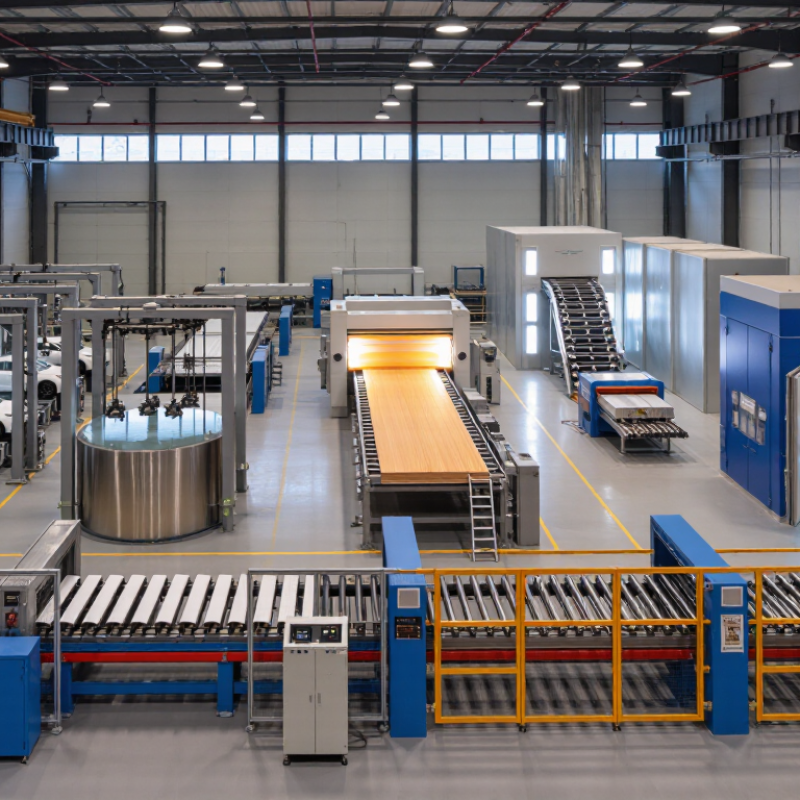
Top 10 Coating Machine Types for Global Buyers?

Choosing the right Coating Machine can shape product quality, production speed, and long-term operating costs. Global buyers face many options, from roll coaters and spray systems to dip, curtain, powder, and vacuum coating machines. Each type serves different materials, surfaces, coating thicknesses, and factory conditions. A machine that performs well in one plant may struggle in another.

This guide reviews ten widely used coating machine types for international purchasing decisions. It considers coating uniformity, throughput, material waste, maintenance access, energy use, and operator safety. Practical details matter. A roll coater may suit flat panels, while a spray system can reach curved parts more effectively. A curtain coater may deliver excellent coverage on continuous boards, but it needs stable material flow and careful viscosity control. Small details matter.

Reliable evaluation should include sample testing, technical documents, spare-parts availability, and supplier service capacity. Buyers should also confirm electrical requirements, installation conditions, cleaning procedures, and applicable quality standards before signing a purchase agreement. These checks reduce unpleasant surprises after delivery. Still, no ranking can fit every factory. Budget limits, workforce skills, local climate, and future product plans may change the final decision. Some conclusions remain subjective, especially when suppliers present similar specifications. That is why experienced buyers compare measured results rather than relying only on brochures. The following overview offers a clear starting point, while encouraging readers to question assumptions and verify performance with real production samples.

Top 10 Coating Machine Types for Global Buyers?

Coating Machines: Definition, Purpose, and Core Operating Principles

Coating machines apply a controlled liquid, powder, or functional film to a moving surface. Common types include roll, spray, dip, curtain, slot-die, gravure, reverse-roll, powder, vacuum, and rotary systems. Their purpose is practical: improve corrosion resistance, appearance, adhesion, barrier performance, or electrical insulation. According to Grand View Research’s 2024 coating equipment analysis, the market could grow at approximately 5.6% annually through 2030. That growth reflects stricter performance demands, not only higher production volumes.

The core principle is simple but demanding. A pump meters the coating, an applicator transfers it, and a dryer or curing unit stabilizes the layer. Line speed, viscosity, wet-film thickness, temperature, and tension must remain balanced. Even a small viscosity change can create streaks or uneven edges. Smithers’ packaging studies continue to identify barrier coatings as an important development area for flexible materials. In practice, equipment selection begins with the substrate, coating chemistry, required thickness, and acceptable waste level. High-speed roll systems suit continuous webs, while spray systems handle complex shapes more easily. Powder systems reduce liquid solvent use, but they still require careful temperature control. No machine is universally best. That assumption often causes costly redesigns. A reliable evaluation should include trial coating, thickness measurement, curing tests, and operator feedback. Mistakes remain possible. Data helps expose them.

The Top 10 Coating Machine Types and Their Main Applications

Top 10 Coating Machine Types for Global Buyers

The Top 10 Coating Machine Types and Their Main Applications

Coating equipment selection depends on material, thickness, speed, and curing method. Roll-to-roll coaters handle films, foils, and battery separators. Gravure machines apply precise layers for flexible packaging. Flexographic coaters suit labels, cartons, and high-speed printing lines. Slot-die systems deliver uniform coatings for batteries, solar cells, and specialty films. Knife-over-roll machines work well with adhesives, textiles, and technical fabrics.

Curtain coaters create smooth, wide layers on boards and panels. Spray coating machines cover complex metal parts, appliances, and automotive components. Dip coating systems provide full immersion coverage for small or irregular parts. Powder coating lines support durable finishes on steel furniture, construction parts, and equipment. Vacuum deposition machines apply extremely thin functional layers to electronics, optical films, and decorative surfaces.

Demand is broadening. Grand View Research estimated the global coating equipment market at about USD 20 billion in 2023, with continued growth through 2030. The International Energy Agency reported over 17 million electric cars sold globally in 2024, increasing demand for battery electrode coating capacity. Real factory experience shows that speed alone is not enough. Web tension, edge control, solvent recovery, and cleaning time can decide profitability. Some machines also waste more material than expected. Buyers should test the actual formulation before approving a final design.

Top 10 Coating Machine Types for Global Buyers? - The Top 10 Coating Machine Types and Their Main Applications

No. Coating Machine Type How It Works Common Substrates Suitable Coating Materials Main Applications Key Advantages Main Considerations
1 Slot-Die Coating Machine A precision die deposits a controlled coating bead directly onto a moving substrate. The coating thickness is mainly adjusted through flow rate, web speed, and die gap. Plastic film, metal foil, paper, nonwoven materials, glass, and flexible electronic films. Adhesives, battery slurries, conductive inks, barrier coatings, optical coatings, and water- or solvent-based formulations. Lithium-ion battery electrodes, separator coatings, optical films, adhesive tapes, specialty labels, and functional electronic films. High coating uniformity, low material waste, excellent suitability for multilayer and precision coating, and good scalability for continuous production. Requires accurate control of viscosity, surface tension, die alignment, filtration, and web tension. Less tolerant of large particles or unstable formulations.
2 Gravure Coating Machine An engraved rotating cylinder picks up coating from a pan and transfers a metered amount to the moving substrate. Plastic films, paper, aluminum foil, decorative laminates, and metalized films. Low-viscosity inks, primers, adhesives, lacquer, release coatings, and functional coatings. Flexible packaging, printed electronics, decorative films, release liners, capacitor films, and high-volume label production. High-speed operation, repeatable coating patterns, good registration capability, and effective performance with thin coatings. Cylinder engraving and changeover can be costly. It generally requires relatively low-viscosity materials and careful solvent or drying management.
3 Reverse-Roll Coating Machine A coating roll and a counter-rotating backup or metering roll create a controlled shear zone that meters coating onto the substrate. Metal strip, plastic film, paper, foil, textiles, and flexible laminates. Adhesives, primers, protective lacquers, silicone release coatings, and medium- to high-viscosity formulations. Adhesive tapes, battery and capacitor films, metal finishing, protective films, transfer coatings, and specialty laminates. Good coating uniformity over a broad operating range, ability to handle higher-viscosity materials, and suitability for continuous web production. Sensitive to roll alignment, nip pressure, substrate defects, and air entrainment. Roll cleaning and surface maintenance are important.
4 Comma-Roll Coating Machine A rotating coating roll applies material while a stationary or adjustable comma blade meters the wet film to the required thickness. Textiles, nonwovens, artificial leather, paper, plastic film, and metal foil. Water-based and solvent-based resins, polyurethane, PVC plastisol, acrylic coatings, adhesives, and silicone compounds. Textile finishing, synthetic leather, waterproof fabrics, industrial fabrics, adhesive layers, and flexible material laminates. Simple and robust construction, flexible wet-film control, relatively easy maintenance, and suitability for medium- to high-viscosity coatings. The blade can create streaks or scratches if damaged or contaminated. It may provide less precision than slot-die systems for very thin functional layers.
5 Knife-Over-Roll Coater A coating layer is applied to the substrate and then metered by a knife positioned above a support roll. Textiles, nonwovens, paper, synthetic leather, carpet backing, and flexible sheet materials. Foams, adhesives, pigment pastes, polyurethane, acrylic, PVC, latex, and other relatively viscous compounds. Textile coating, coated fabrics, flooring materials, filtration media, upholstery materials, and industrial fabric treatment. Handles high-viscosity and filled formulations well, offers broad coating-width capability, and can produce substantial coating weights. Surface smoothness depends strongly on rheology, knife geometry, and web support. It is not usually the first choice for ultra-thin, defect-sensitive coatings.
6 Dip Coating Machine Parts or continuous material pass through a liquid bath and are withdrawn at a controlled speed, allowing a film to remain on the surface. Metal parts, glass, ceramics, wires, fibers, textiles, and three-dimensional components. Paints, primers, corrosion-resistant coatings, polymers, ceramic suspensions, and chemical treatment solutions. Corrosion protection, wire coating, medical components, laboratory glassware, ceramic processing, and coating of complex geometries. Can coat complex shapes and internal or recessed areas with relatively simple equipment. It is suitable for batch and continuous processes. Drainage marks, edge buildup, bath contamination, and solvent or water evaporation can affect consistency. Bath control is essential.
7 Curtain Coating Machine A continuous curtain of coating falls onto a horizontally moving product, creating a contactless coating layer. Wood panels, furniture boards, flooring panels, glass, metal sheets, and rigid composite boards. Water-based lacquers, UV-curable coatings, primers, stains, protective finishes, and clear coats. Furniture finishing, flooring, wood panels, decorative boards, glass coating, and high-throughput flat-panel finishing. High production speed, contactless application, good coverage of broad flat surfaces, and compatibility with automated finishing lines. Requires stable flow across the curtain width and accurate product spacing. It is generally unsuitable for highly irregular or vertical surfaces.
8 Air-Spray Coating Machine Compressed air atomizes liquid coating into droplets, which are directed onto the workpiece through a spray gun or automated spray head. Metal, plastic, wood, glass, ceramics, automotive components, and assembled products. Paints, primers, varnishes, lacquers, water-based coatings, solvent-based coatings, and specialty protective finishes. Automotive parts, appliances, furniture, machinery, general industrial painting, and finishing of three-dimensional components. Flexible for complex shapes, quick color changes, adjustable spray patterns, and easy integration with manual or robotic systems. Overspray can reduce transfer efficiency and requires ventilation and filtration. Coating quality depends on operator or robot settings, atomization, and environmental conditions.
9 Electrostatic Powder Coating System Dry powder particles are electrically charged and attracted to a grounded workpiece before being melted and cured in an oven. Conductive metals such as steel, aluminum, and galvanized components. Thermosetting epoxy, polyester, epoxy-polyester hybrid, and thermoplastic powder coatings. Metal furniture, appliances, automotive components, electrical enclosures, construction profiles, and general metal fabrication. Low or zero solvent emissions during application, strong durability, efficient powder recovery, and good resistance to impact and corrosion when properly specified. Requires an oven and electrically conductive or suitably prepared parts. Faraday-cage areas, color changes, powder handling, and curing conditions need careful management.
10 Electroplating Coating System An electric current deposits metal ions from an electrolyte onto a conductive workpiece acting as the cathode. Conductive metals and properly pretreated plastics or composite parts. Copper, nickel, chromium, zinc, tin, silver, gold, and related alloy plating chemistries. Electrical connectors, printed circuit components, automotive parts, hardware, decorative fittings, and wear- or corrosion-resistant surfaces. Provides controlled metal deposition, improved conductivity, corrosion resistance, wear resistance, solderability, or decorative appearance. Requires multiple pretreatment and rinsing stages, wastewater management, chemical control, and strict process safety. It is mainly intended for conductive surfaces.

Note: The most suitable coating machine depends on substrate geometry, coating chemistry, target wet or dry thickness, production speed, line width, curing method, and required surface performance.

Key Technical Differences Among Coating Machine Categories

Top 10 Coating Machine Types for Global Buyers

A clean ranking is misleading. Coating machines solve different viscosity, width, speed, and curing problems. Gravure and flexographic coaters use engraved or patterned rollers. They suit repeatable, high-volume liquid coating. Slot-die systems meter fluid through a narrow gap. They provide excellent thickness control, especially for battery films and advanced laminates. Knife-over-roll and comma-bar coaters use a blade or bar to set wet thickness. These designs tolerate some high-viscosity formulations, but cleaning can be demanding.

Dip coaters immerse parts fully, creating coverage inside recesses. Spray machines offer flexible coverage and rapid color changes, yet overspray control matters. Curtain coaters create a falling liquid sheet for flat panels. Roll-to-roll lines combine unwinding, coating, drying, and rewinding for continuous web production. Powder coating systems apply charged particles before thermal curing. That changes the process completely; there is no liquid solvent stage.

Technical selection should follow measurable targets. Buyers should compare wet-film accuracy, line speed, drying energy, web tension, and changeover time. MarketsandMarkets estimated the global coating equipment market at about USD 19 billion in 2023, with continued growth toward 2028. The report also separates liquid and powder equipment, confirming that “coating capacity” is not one technical category. Smithers reported strong ongoing demand for flexible packaging and functional films in its 2024 packaging analysis. Still, market growth does not guarantee a suitable machine. A fast gravure line may waste material during short runs. A slot-die machine may expose defects instantly. That is an uncomfortable detail. Pilot trials, viscosity testing, and measured dry-film results remain more reliable than brochure claims.

How Global Buyers Should Compare Capacity, Materials, and Performance

Top 10 Coating Machine Types for Global Buyers

Global buyers should compare coating machines by production goals, not catalogue rankings. The main types include roll-to-roll, slot-die, gravure, flexographic, curtain, spray, dip, knife-over-roll, comma-coating, and powder-coating systems. Each handles capacity differently. A roll-to-roll line may run continuously for long web materials, while a spray system suits shaped parts and smaller batches. Check actual output, not advertised maximum speed.

Material compatibility is equally important. Thin films may need precise tension control and low-viscosity handling. Textiles, metal sheets, ceramics, and molded components require different feeding and drying methods. Ask for trials using your real substrate, coating viscosity, solids content, and target thickness. A clean sample is useful, but it does not prove stable production. Small edge defects often appear only after several hours.

Performance should include coating uniformity, drying efficiency, changeover time, waste rate, and maintenance access. Measure thickness across the web, adhesion after curing, and surface appearance under practical lighting. Operators also need clear controls and safe cleaning procedures. Capacity estimates can be optimistic. In my experience, an efficient machine with fewer stoppages may outperform a faster line. A perfect comparison rarely exists. Allow room for testing, operator feedback, and a second review of your original assumptions.

Safety, Maintenance, Standards, and Supplier Evaluation Criteria

Choosing among the top 10 coating machine types requires more than comparing speed, capacity, and price. Safety and serviceability often decide the real cost of ownership.

During a factory review, inspect guards, emergency stops, interlocks, heated zones, and solvent ventilation. Ask whether operators can clean rollers without reaching dangerous points. A clear lockout procedure matters. So does noise control. Small details matter.

Maintenance should be practical, not theoretical. Check access to pumps, nozzles, filters, bearings, and electrical cabinets. Request preventive maintenance schedules, spare-parts lists, lubrication points, and average repair times. A machine that needs special tools may slow production during a minor fault. I have seen buyers focus on output while ignoring cleaning time. That mistake becomes expensive.

Supplier evaluation needs evidence. Review technical drawings, factory acceptance tests, operator training, warranty terms, and documented change control. Confirm alignment with applicable standards, such as ISO 12100 for machinery risk assessment and ISO 9001 quality procedures. Regional requirements may also involve electrical safety, pressure systems, emissions, or conformity marking. Never accept a certificate without checking its scope and issuing body.

Ask for references from facilities using similar coatings and production volumes. A live video test is useful, but it is not enough. Samples should be tested with your actual substrate, viscosity, drying conditions, and target thickness. No checklist is perfect. Leave room for questions the supplier cannot answer immediately. That hesitation may reveal more than a polished presentation.

Cell Projects Ltd
Privacy Overview

This website uses cookies so that we can provide you with the best user experience possible. Cookie information is stored in your browser and performs functions such as recognising you when you return to our website and helping our team to understand which sections of the website you find most interesting and useful.