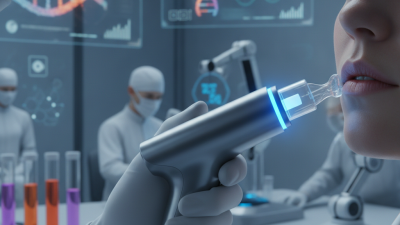
China Top 10 Buccal Swab Technology Manufacturers?

China’s buccal swab technology industry has become increasingly important in clinical testing, biobanking, ancestry research, and forensic sample collection. Behind every small collection tube is a practical question: can the device capture enough clean DNA for dependable analysis?

John M. Butler, a respected forensic DNA scientist, has stated, “The quality of the DNA profile depends on the quality of the DNA sample.” This principle guides our review of China’s top ten buccal swab technology manufacturers. It also exposes a common weakness: attractive packaging cannot compensate for poor flocking, unstable transport media, or unclear instructions.

The companies selected for this overview are assessed through a professional lens. We consider swab design, DNA recovery, preservation performance, manufacturing consistency, customization capability, documentation, and quality-management practices. Certifications and test reports matter, but they should be checked against the intended application. A research kit, a clinical collection device, and a home-use product may require different evidence.

Some manufacturers demonstrate strong technical depth. Others appear competitive mainly through pricing or flexible order volumes. That distinction deserves attention. A lower unit cost may hide higher repeat-collection expenses. A polished website may also reveal little about production controls.

This article is not a final verdict. Supplier information can change, and independent validation remains necessary. Still, it offers a practical starting point for laboratories, distributors, and healthcare buyers seeking reliable buccal swab technology from China. The real test is simple: consistent samples, clear records, and performance that remains stable beyond the product brochure.
China Top 10 Buccal Swab Technology Manufacturers?

What Is Buccal Swab Technology and How Does It Work?

Buccal swab technology collects epithelial cells from the inside of the cheek. A sterile swab gently rubs the tissue for several seconds. This motion gathers cells that contain genomic DNA. The process is painless and usually requires no needles, blood tubes, or special equipment. It suits many laboratory workflows, including identity testing, genetic research, and selected clinical applications.

After collection, the swab must dry properly. Moisture can encourage microbial growth and reduce sample quality. Trained staff place it in a labeled tube, then record collection details. In the laboratory, technicians release DNA from the cells through chemical or mechanical steps. Polymerase chain reaction can amplify selected genetic regions. Sequencing instruments may examine broader DNA patterns. Internal controls help reveal weak signals, contamination, or failed reactions.

The method is practical, but it is not foolproof. A hurried cheek rub may produce too few cells. Touching the swab tip can also compromise the sample. Storage conditions matter, especially during transport. Experienced manufacturers therefore focus on swab material, handle design, packaging, and compatibility with extraction systems. Independent quality testing remains important. A clear instruction sheet helps, but it cannot replace careful handling. In real use, small collection mistakes may create larger laboratory problems. That detail deserves more attention.

Key Criteria for Evaluating Chinese Buccal Swab Manufacturers

Evaluating Chinese buccal swab manufacturers requires more than comparing unit prices. In practice, I begin with documented quality systems, process controls, and traceability. A credible supplier should explain its manufacturing site, cleanroom controls, inspection methods, and relevant certifications. ISO 13485 can support confidence, but a certificate alone proves little. Ask to review its scope, validity, and recent audit findings when available.

Material selection deserves close attention. Medical-grade plastic, non-toxic adhesive, and consistent fiber distribution affect comfort and sample recovery. The swab head should remain secure during collection and transport. For molecular workflows, test data should address DNA yield, inhibition, RNase or DNase control, and compatibility with extraction kits. Sterile products need clear sterilization validation, package-integrity testing, and defined shelf-life evidence. Small details matter. A loose cap can damage an otherwise sound shipment.

Reliable manufacturers provide lot records, retention samples, complaint procedures, and realistic lead times. I also look for pilot samples from several production lots, not one carefully selected batch. Communication matters when specifications change. Ask how deviations are investigated and corrected. Price still matters, but unusually low pricing deserves questions about materials, testing, or packaging. My assessment can remain incomplete without an on-site audit or independent laboratory review. That is an uncomfortable limitation, but an honest one.

China’s Top 10 Buccal Swab Technology Manufacturers

China’s Top 10 Buccal Swab Technology Manufacturers

China’s top ten buccal swab technology manufacturers should be judged by performance, not promotional rankings. Leading producers usually offer flocked nylon, foam, or polyester swabs for DNA collection. Their facilities often support molding, automated assembly, sterile packaging, and batch traceability. Experienced buyers should review ISO 13485 systems, material certificates, and documented quality controls. A reliable manufacturer can explain fiber shedding, sample release, tube compatibility, and storage stability in practical terms. Clear answers matter.

A strong supplier also provides samples for laboratory comparison. Test the swab against your collection method, transport medium, and extraction process. Check shaft flexibility, tip dimensions, breaking points, and packaging seals. Some manufacturers support private-label production, but customization can increase inspection demands. A neat ranking can still mislead. I would not trust a catalogue alone. Factory audits, recent batch records, and independent validation offer stronger evidence. Minor details, such as a loose cap or uneven tip, may affect user confidence.

Tips: Request three sample lots. Compare recovery data. Ask for sterility records when applicable. Confirm production lead times in writing. Keep evaluation notes, even for small defects. A supplier that welcomes technical questions is usually easier to manage. Still, no single factory fits every project. Budget, application, compliance needs, and shipment conditions can change the best choice.

Technology Comparison Across the Top Chinese Manufacturers

China’s leading buccal swab manufacturers differ mainly in collection design, preservation chemistry, and production control. Some use flocked nylon tips to improve cellular release from the inner cheek. Others favor traditional fiber structures for lower cost and simpler handling. Tip geometry also matters. A narrow tip can reach comfortably, while a wider tip may collect more material.

Preservation systems show greater variation. Dry tubes reduce liquid leakage and simplify shipping. Liquid media can protect nucleic acids during longer transport, but they require tighter sealing and temperature checks. More advanced facilities combine automated filling, barcode tracking, and camera inspection. These steps help control tube volume, cap placement, and packaging defects. Small errors still happen.

Laboratory validation separates credible suppliers from ordinary producers. Strong manufacturers test recovery rates, inhibition risks, microbial control, and stability across realistic storage periods. They also provide batch records and clear instructions for sample collection. However, published performance data may use ideal laboratory conditions. Field results can be less consistent when users swab too briefly or store samples improperly. This is where comparison becomes difficult. Procurement teams should review independent testing, production audits, and complaint records rather than relying on catalog claims alone. A balanced assessment should match the swab technology with the intended workflow, sample transport distance, and testing method.

China Top 10 Buccal Swab Technology Manufacturers? - Technology Comparison Across the Top Chinese Manufacturers
Anonymized technology comparison based on commonly available buccal swab manufacturing configurations in China. The profiles describe product capabilities rather than company or brand-specific data.
Technology Profile Swab Tip Material Shaft and Handle Sample Release Performance Collection and Transport Format Molecular Testing Compatibility Automation Readiness Typical Application and Manufacturing Characteristics
Profile 01
★★★★★
Nylon flocked fibers with high surface area Medical-grade polypropylene shaft; molded breakpoint Fast capillary absorption and efficient elution for PCR workflows Individually packaged sterile swab; compatible with liquid transport media Suitable for DNA extraction, PCR, qPCR and sequencing-library preparation High; compatible with rack-based sample processing Designed for diagnostic sampling, with emphasis on low background and consistent tip geometry
Profile 02
★★★★★
Polyester fiber tip Polystyrene or polypropylene shaft; optional breakpoint Good collection efficiency with moderate release into buffer Swab-only format or tube-packed format; dry transport commonly available Compatible with routine nucleic-acid extraction and antigen sample preparation Medium to high; suitable for manual and semi-automated handling Often selected for general-purpose specimen collection and cost-sensitive laboratory programs
Profile 03
★★★★☆
Medical polyurethane foam Polypropylene shaft with smooth molded handle High liquid absorption; release depends on foam density and buffer composition Dry swab, transport-tube and pre-filled medium configurations Useful for microbiology, rapid tests and selected molecular assays Medium; foam compression should be considered during automated processing Provides a soft collection surface and is commonly used where patient comfort is important
Profile 04
★★★★☆
Rayon or viscose fiber Wooden, polypropylene or polystyrene shaft depending on configuration Acceptable uptake; release performance varies by fiber density Commonly supplied as individually wrapped dry swabs Suitable for basic microbiological sampling and selected extraction procedures Low to medium; mainly intended for manual workflows Traditional construction with broad availability and flexible packaging options
Profile 05
★★★★☆
Nylon flocked tip with extended sampling surface Flexible polypropylene shaft; standard or custom breakpoint High surface contact and rapid sample transfer to extraction buffer Tube-integrated format, dry format and liquid-medium format Appropriate for human DNA collection, infectious-disease screening and genotyping High; supports barcode labeling and multi-tube processing Focused on standardized collection geometry and compatibility with laboratory information workflows
Profile 06
★★★★☆
Polyester or rayon blended fiber Polypropylene shaft with ergonomic grip Balanced absorption and release for routine sample collection Individually wrapped dry swab; optional sterile transport tube Compatible with PCR, immunoassay and general laboratory extraction methods Medium; suitable for standard tube racks Offers a practical balance between material cost, comfort and routine diagnostic performance
Profile 07
★★★★☆
Mini nylon flocked tip for pediatric or limited-area sampling Short polypropylene shaft; compact molded handle Good performance when sample volume is limited Small-volume transport tube or dry swab packaging Suitable for low-input DNA testing and targeted molecular assays Medium to high; compact geometry supports multi-well and rack formats Designed for smaller oral cavities, pediatric collection and applications requiring a reduced swab profile
Profile 08
★★★☆☆
Foam or polyester tip with absorbent head Flexible plastic shaft; rounded handle Good fluid absorption but slower elution than high-performance flocked designs Dry collection format and standard transport tube Commonly used for rapid screening and non-critical sample preparation Medium; manual tube handling is generally preferred Prioritizes patient comfort, soft contact and broad use across basic specimen-collection tasks
Profile 09
★★★☆☆
Standard polyester fiber Polystyrene or polypropylene shaft Reliable routine uptake with moderate sample recovery Individually wrapped dry swab; bulk packaging may be available Suitable for basic PCR preparation when validated with the selected extraction system Low to medium Commonly used for large-volume procurement where basic functionality and packaging flexibility are priorities
Profile 10
★★★☆☆
Custom fiber, foam or flocked configuration Custom shaft length, breakpoint and handle geometry Performance depends on the selected tip material and validation protocol Custom tube, transport medium, pouch and labeling options Can be configured for PCR, sequencing, microbiology or research-use workflows Variable; determined by the final tube and rack specification Best suited to OEM and private-label projects requiring customized dimensions, packaging or sample-preservation conditions

Applications, Quality Standards, and Purchasing Considerations

When comparing China’s top ten buccal swab technology manufacturers, application fit matters more than catalog size. Buccal swabs support genetic testing, pharmacogenomics, clinical research, and biobanking. They also simplify collection when blood sampling is unsuitable. Fortune Business Insights valued the global molecular diagnostics market at approximately US$15.8 billion in 2023. Its report projects about US$36.3 billion by 2032. This growth increases demand for consistent DNA collection materials.

Quality review should begin with documented extraction performance. Ask for DNA yield, purity, microbial limits, and sample stability at defined temperatures. ISO 13485 certification supports controlled manufacturing, while ISO 10993 data may help assess patient-contact materials. Relevant packaging details include sterile barriers, tamper evidence, lot numbers, and expiration dates. A certificate alone is not enough. Request independent validation where possible.

Purchasing teams should compare flocking uniformity, shaft strength, transport compatibility, minimum order quantities, and replacement policies. A supplier should explain whether the swab works with automated extraction systems. It should also provide traceability from raw materials to finished lots. Grand View Research continues to report strong growth in genetic testing, but market growth does not guarantee product reliability. One weakness remains: performance data is often incomplete. I would test multiple lots before committing to a large order. Small details matter.

China Top 10 Buccal Swab Technology Manufacturers — Applications, Quality Standards, and Purchasing Considerations

Buccal swabs are used for non-invasive collection of oral epithelial cells in applications such as DNA genotyping, forensic screening, ancestry testing, and molecular diagnostic workflows. The chart shows the publication year of major international standards commonly considered when evaluating swab manufacturers, product safety, sterilization, labeling, and technical documentation.

Purchasing considerations: Confirm the swab material and tip design, collection efficiency, shaft strength, packaging integrity, sterility status, lot traceability, compatibility with downstream extraction methods, and the supplier’s quality-management documentation. The applicable standards should be verified against the intended market, product classification, and use case.

Cell Projects Ltd
Privacy Overview

This website uses cookies so that we can provide you with the best user experience possible. Cookie information is stored in your browser and performs functions such as recognising you when you return to our website and helping our team to understand which sections of the website you find most interesting and useful.